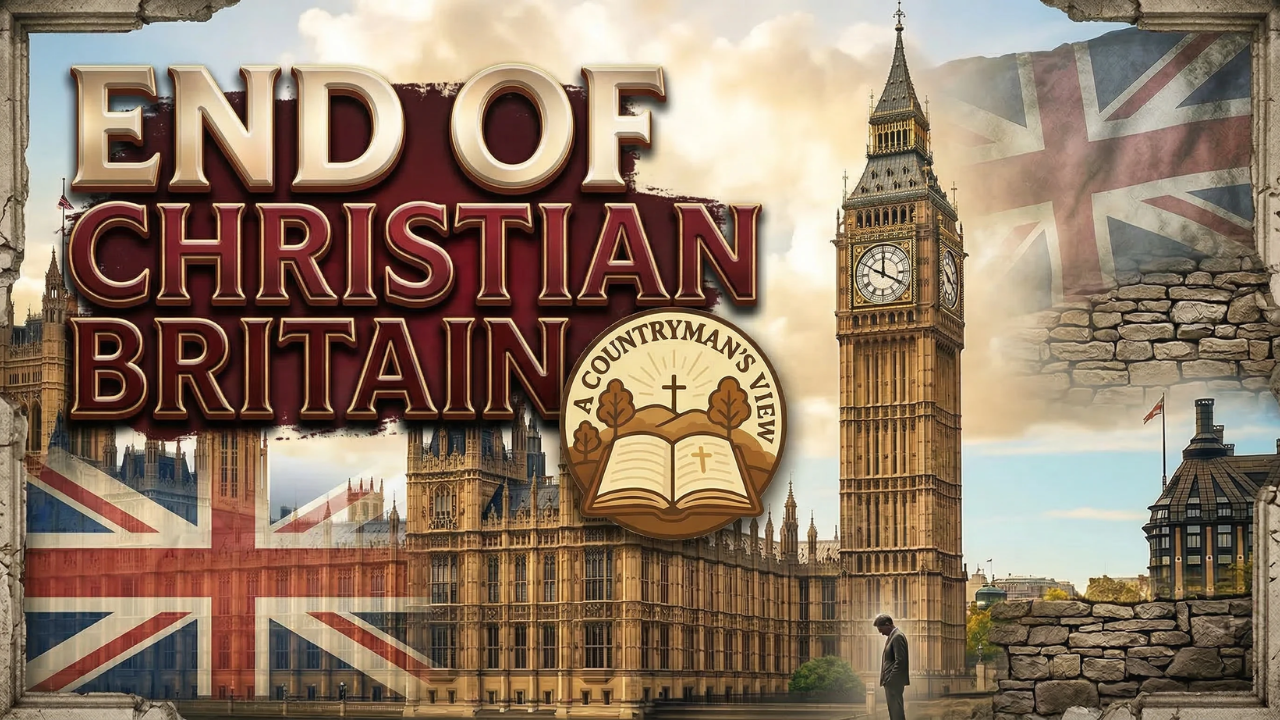
In this video and blog posts, I want to ask the question, Is Christianity being removed from our Britain? Recent discussions surrounding the possibility of removing Christianity as Britain’s national religion have sparked significant debate. Reports circulating online, along with commentary from sources such as Premier Christian News and GB News, suggest that political voices are questioning whether the Church of England should continue to hold its established status. While the accuracy and intent behind these claims can be debated, the conversation itself raises an important and far-reaching question about the identity of the nation.
Rather than being a minor political talking point, this issue touches on history, culture, and the deeper spiritual direction of the country. It invites a wider conversation about what Britain stands for and where it may be heading.
Britain’s Christian Heritage and Influence
For centuries, Christianity has played a central role in shaping Britain’s moral framework, legal system, and cultural identity. Even those who would not describe themselves as believers often benefit from values that have their roots in biblical teaching. Principles such as justice, compassion, personal responsibility, and care for others did not develop in isolation but were strongly influenced by Christian doctrine.
A closer look at British institutions reveals just how embedded Christianity has been in public life. Bishops continue to sit in the House of Lords, church schools are found across the country, and chaplaincy services remain active in places such as prisons and hospitals. Removing Christianity from its established position would therefore have implications that extend well beyond symbolism.
The Christian Roots of British Law
One area where this influence is particularly evident is within the legal system. The well-known “neighbour principle,” which forms the basis of modern negligence law, reflects the biblical instruction to “love your neighbour.” This connection highlights how Christian teaching has contributed to laws designed to protect individuals and promote responsibility.
Many people may not realise that Scripture itself is present within the Houses of Parliament, including the verse from Psalm 127:1 which states, “Unless the Lord builds the house, they labour in vain that build it.” Such details serve as reminders of how closely faith and governance have been linked throughout British history.
A Nation in Cultural and Spiritual Transition
Despite this heritage, Britain has been experiencing a gradual cultural shift. Church attendance has declined over the years, and expressions of Christian faith are no longer as central in public life as they once were. In some cases, faith is even viewed with scepticism or dismissed altogether.
Against this backdrop, it is not surprising that questions are being raised about the role of Christianity within the nation. The idea of disestablishment reflects a broader trend in which traditional structures and beliefs are being reconsidered.
A Biblical Perspective on National Direction
From a biblical standpoint, the condition of a nation is closely connected to its spiritual direction. Proverbs 14:34 teaches that “righteousness exalts a nation, but sin is a reproach to any people,” while Psalm 33:12 speaks of the blessing that comes when a nation acknowledges the Lord.
At the same time, Scripture offers a warning in Hosea 4:6, where it says that people are destroyed for lack of knowledge, particularly when that knowledge is rejected. These passages point to the importance of truth and the consequences of turning away from it.
Beyond Politics: The Unchanging Gospel
While the political aspects of this debate are significant, the Christian message ultimately goes far beyond government decisions or national structures. The Gospel does not depend on whether Christianity is formally recognised by the state. Its truth remains constant regardless of cultural or political change.
Jesus made it clear that His kingdom is not of this world, and that reality brings a sense of stability even in uncertain times. Although institutions may shift and traditions may be challenged, the message of salvation through Christ continues to transform lives.
The Importance of Personal Faith
The most important issue is not simply whether a nation identifies as Christian, but whether individuals know Christ personally. A national label cannot replace a genuine relationship with God. True transformation happens at the personal level, as people respond to the Gospel and receive the gift of eternal life.
Stories of changed lives continue to emerge, including those who have encountered faith in difficult circumstances such as prison environments or personal crises. These testimonies demonstrate that the power of the Gospel is not limited by social or political conditions.
Related Articles You May Find Helpful
- Christian Outrage: What Does the Bible Say?
- Church of England: Climate or Christ?
- Faith on the Football Pitch
Final Thoughts
As Britain continues to change, conversations about faith and national identity are likely to become more prominent. Whether one sees these developments as positive or concerning, the enduring relevance of Christianity cannot be dismissed lightly.
Ultimately, the question goes deeper than politics or tradition. It comes down to truth, belief, and the place that Christ holds in people’s lives today.
If you have thoughts on this subject, feel free to share them. Open and honest discussion is valuable, particularly when it seeks to explore matters of lasting importance.